Derila ERGO Memory Foam Pillow
Is Your Memory Foam Pillow Too Firm? How to Break It In for Better Sleep
Last updated: October 18, 2026 8:00:00 AM
Looking up How to Soften? See how Derila ERGO - Memory Foam Pillow is used day to day, where it fits, and what to check before you try it.
Bringing home a brand-new memory foam pillow often comes with a surprising sensation of unexpected stiffness. If you are wondering how to soften a memory foam pillow quickly, the most reliable approach combines ambient warmth, continuous mechanical movement, and simple physical patience. Viscoelastic foam is dense right out of the factory mold, meaning the internal air pockets and polymer cells are compressed and rigid. By applying gentle, repetitive pressure and keeping the pillow in a warm environment, you help relax those tightly bound structures. Within a few days of consistent handling and regular nighttime use, the material naturally relaxes into a much more pliable, contouring surface.
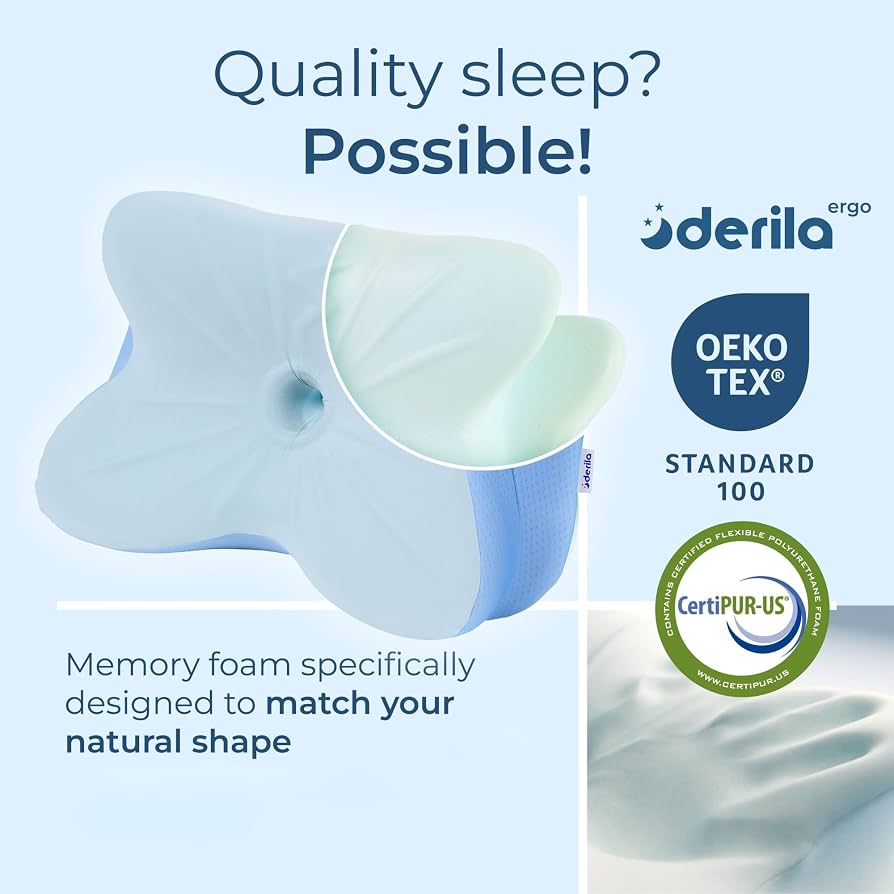
The reason fresh foam feels so unyielding at first is directly tied to the temperature-sensitive nature of viscoelastic materials. When a pillow sits in warehouse boxes or gets transported during cool weath The Derila Ergo Pillow features a butterfly-shaped memory foam core designed to encourage a more natural spinal alignment; however, as its popularity has … er, the foam naturally contracts, becoming noticeably denser and harder to the touch. Knowing how to soften this initial rigidity prevents you from abandoning an otherwise supportive sleep product before it has had a fair chance to adapt to your body. Giving the material several days of routine exposure to normal room temperatures and gentle physical compression will accelerate the softening process. Taking deliberate steps during those initial days can significantly shorten the break-in timeline and help you sleep far more comfortably.
Practic Honest Derila Ergo Pillow Review: Pros, Cons & What Nobody Mentions al Steps on How to Soften a Memory Foam Pillow
The pri Cervical Spine Anatomy: C1–C7 Vertebrae, Muscles & Nerves mary factor in softening memory foam is ambient temperature. Memory foam reacts dynamically to the climate around it, contracting when exposed to cool air and relaxing when exposed to mild, steady warmth. If your bedroom is kept below standard room temperature, your pillow will naturally maintain a firmer density throughout the night. To start loosening the material, place the pillow in the warmest room in your home for several hours, or let it rest near a gentle heat source—taking care never to place it directly against radiators or heating vents. Allowing the core material to absorb room-level warmth helps loosen the tight molecular bonds created during manufacturing, making the inner core significantly more responsive to subsequent pressure.
Once the foam has had time to warm up, physical manipulation is the next essential step. Think of new memory foam much like a fresh pair of leather boots that requires physical flexing to reach peak comfort. You can place the pillow on a clean, flat surface and gently knead it with your palms and fingertips, moving systematically from the center out toward the edges. Rolling the pillow gently or pressing clean, flat weights against the surface also helps push air into the internal cellular structure. Doing this for five to ten minutes a day accelerates the mechanical breakdown of that initial out-of-the-box stiffness without damaging the core integrity of the foam.
Where the Derila ERGO - Memory Foam Pillow Fits Into BEST Definition & Meaning - Merriam-Webster the Process
Ergonomic sleeping accessories require a slightly different mindset during the break-in phase, and that is precisely where a product like the Derila ERGO - Memory Foam Pillow enters the picture. Unlike standard flat pillows, an ergonomic pillow features sculpted contours, raised neck rolls, and a recessed central cradle designed to support the head while keeping the cervical spine in a neutral posture. Because of these distinct functional zones, the Derila ERGO - Memory Foam Pillow often feels particularly firm when it is brand new. The denser molded zones along the lower curve are built to maintain structural integrity under the weight of the neck, which means those sections require targeted pressure and warmth to settle into their intended contour.
When working to soften an ergonomic pillow, the goal is never to destroy its underlying firmness, but rather to help it conform accurately to your unique anatomical measurements. With the Derila ERGO - Memory Foam Pillow, you want the central hollow to soften enough to let your head rest comfortably while ensuring the side ridges and lower contour retain enough substance to support side and back sleeping. Spending a few minutes gently pressing your hands into the neck roll and central groove before turning off the lights helps prime the viscoelastic material for your body heat. Over the course of the first couple of weeks, daily body contact and natural room warmth allow the pillow to soften along your personal contact points while preserving the essential alignment features that make ergonomic designs beneficial in the first place.
Common Mistakes to Avoid When Breaking In Memory Foam
In the quest to speed up the softening process, many sleepers resort to extreme measures t BEST Definition & Meaning - Merriam-Webster 5 days ago · In the best of all possible worlds, no one would be without food and clean water. I have a wonderful … hat can permanently ruin their pillow. The most critical mistake to avoid is applying direct, intense heat. Placing a memory foam core inside a standard clothes dryer, even on low settings, can scorch the synthetic polymers, melt the delicate internal webbing, or cause the pillow to crumble prematurely. Similarly, using hair dryers, heating pads set to high, or placing the foam directly over a baseboard heater will degrade the structural resilience of the material. Gentle, indirect ambient warmth is the only safe way to relax the foam without compromising its durability.
Another frequent error involves aggressive mechanical force or exposure to moisture. Submerging a solid memory foam pillow in water under the mistaken belief that a wash cycle will soften the core is a surefire way to trap moisture inside, leading to mildew, unpleasant odors, and permanent breakdown of the material. Likewise, aggressively bending, wringing, or stomping on the pillow can tear the internal cell walls rather than gently opening them up. Memory foam is engineered to withstand gradual, distributed compression, not violent twisting or sharp localized impacts. Exercising moderate patience and sticking to gentle, steady kneading ensures your pillow softens evenly while maintaining its supportive shape for years to come.
Frequ Best Buy | Official Online Store | Shop Now & Save Shop Best Buy for electronics, computers, appliances, cell phones, video games & more new tech. Store pickup … ently Oct 18, 2026 · 2026 Winners · Best of Sarasota Asked Questions
How long does it u Shop Best Buy for electronics, computers, appliances, cell phones, video games & more new tech. Store pickup & free 2-day …Read more sually take to break in a new memory foam pillow?
Most memory foam pillows take between three to fourteen days of regular use to fully soften and adapt to your head and neck. During the first few nights, the material will naturally feel firmer than anticipated because it hasn’t had repeated exposure to your body heat. You can speed up this transition by kneading the pillow with your hands during the day and ensuring your bedroom maintains a moderate temperature. If you sleep in a cooler climate, the adaptation period might take closer to three weeks. Regular daily compression is the most dependable way to achieve a comfortable, customized feel.
Can I wash the memory foam core to make Cervical Spine Anatomy: C1–C7 Vertebrae, Muscles & Nerves Jan 1, 2026 · Explore cervical spine anatomy with clear diagram, vertebrae, muscles, nerves & … it softer?
No, you should never submerge or saturate a solid memory foam core in water to change its texture. Memory foam behaves like an ultra-dense sponge that ab BEST | English meaning - Cambridge Dictionary best adjective, adverb (HIGHEST QUALITY) of the highest quality, to the greatest degree, in the most effective … sorbs water deep into its internal pockets, making it nearly impossible to dry thoroughly without introducing mold or mildew. Furthermore, the weight of trapped water can rip the delicate internal bonds of the foam when handled. If you need to clean the pillow, simply remove and wash the outer fabric cover while spot-cleaning the inner foam with a damp, soapy cloth only when necessary. To soften the core safely, rely entirely on gentle warmth and dry physical compression.
Does sleeping in a cold bedroom make memory foam firmer?
Yes, ambient bedroom temperature has a direct and measurable effect on how firm a memory foam pillow feels throughout the night. Viscoelastic foam is naturally sensitive to thermal shifts, meaning it tightens and stiffens when exposed to colder air currents. If you keep your thermostat set quite low at night, the pillow will start out noticeably firmer and will take longer to contour around your neck. You can counter this by resting your head in one place for a few minutes to let your body heat warm the surface, or by keeping the pillow covered with a warm blanket until you are ready to sleep.
Can I walk or step on the pillow to speed up the soften Oct 17, 2026 · Cervical vertebrae - Wikipedia In sauropsid species, the cervical vertebrae bear cervical ribs. In lizards and saurischian dinosaurs, the cervical ribs are … ing?
While applying full adult body weight directly to a pillow is risky, walking gently across the surface with clean socks or bare feet can be an effective technique if done with care. The key is to distribute your weight evenly and avoid digging your heels sharply into any single point of the foam. Step across the entire surface slowly for two or three minutes to gently compress the deep cell layers and expel factory-trapped air. Be cautious not to twist your feet while standing on the foam, as torque can shear or tear the internal structure. If you are uncertain about applying that much weight, sticking to manual hand kneading is always the safer alternative.
How do I know if my pillow is simply too firm for my sleeping style?
If you have actively worked to soften the pillow for three to four consecutive weeks and still wake up with neck stiffness, headaches, or pressure points around your ears, the pillow may simply be the wrong density or loft for your frame. Stomach sleepers and individuals with smaller shoulders generally require softer, lower-profile pillows to maintain proper spinal alignment. Back and side sleepers require varying degrees of firmer support, but the pillow should always yield enough under the head to prevent unnatural tilting of the neck. If your neck feels constantly pushed upward or unsupported despite an extended break-in period, the pillow’s base firmness is likely not a match for your sleeping posture.